
 Save to Pinterest
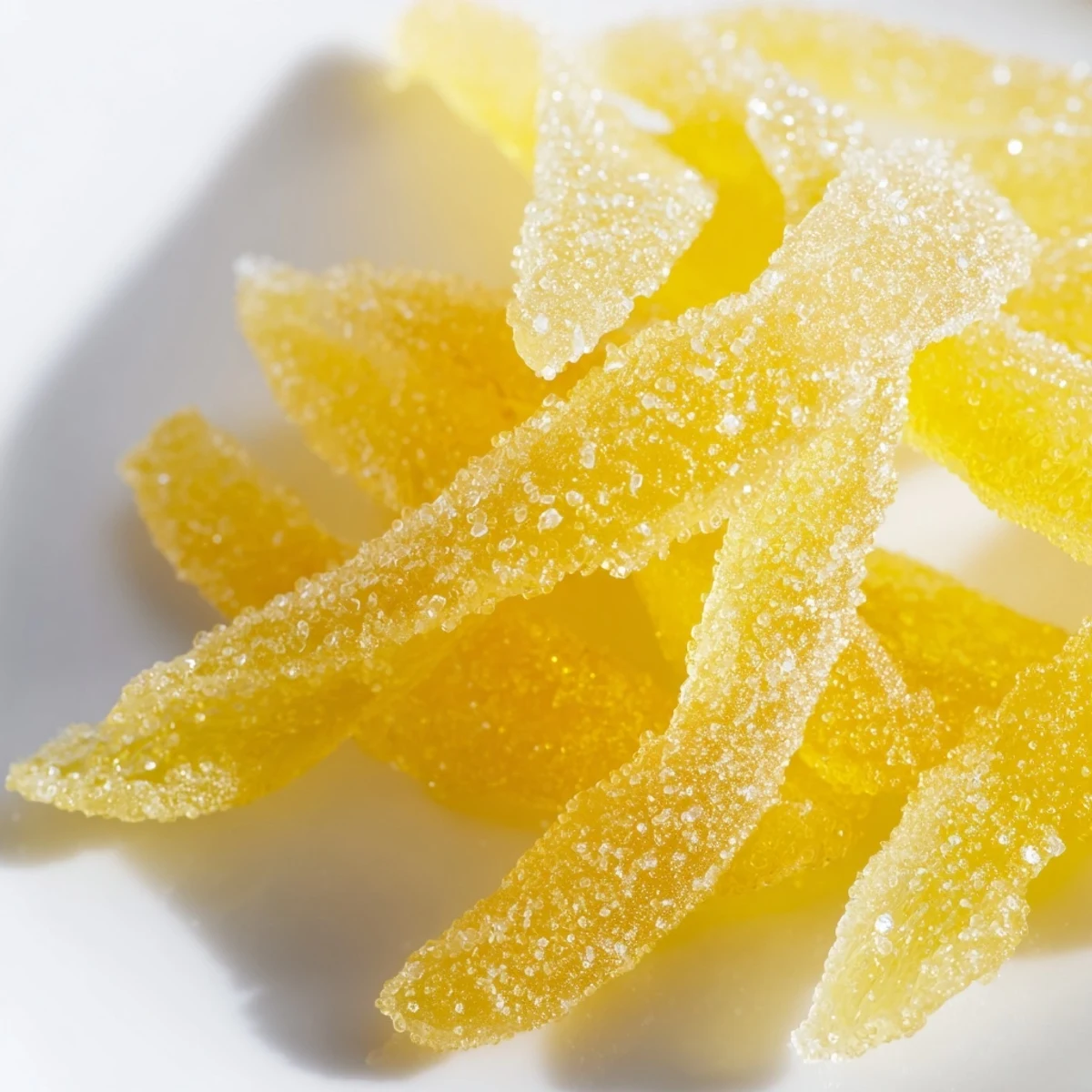
 This preparation transforms lemon peels into a sweet and tangy treat by simmering thin strips of lemon zest in a gentle sugar syrup. The peels are first blanched to reduce bitterness, then cooked slowly until tender and translucent. Once dried, they are coated in sugar for a delightful texture and sweetness. Ideal as a natural garnish or a standalone snack, these candied peels offer vibrant citrus flavor with a satisfying chew.
I started making candied lemon peel after a winter dinner party left me with a bowl of squeezed lemon halves and too much restless energy to just toss them out. The kitchen smelled sharp and clean, and I figured if marmalade exists, why not candy? That first batch turned out darker than I wanted, a little chewy, but I ate half of it standing by the stove and saved the rest in a jar I kept opening all week.
I brought a small tin of these to my neighbor after her lemon tree went wild one spring, and she laughed because I'd essentially given her back her own lemons. But she kept them on her counter and told me later she'd been putting them in her morning tea. That felt like winning.
Ingredients
- 3 large lemons (preferably organic): Organic matters here because you're eating the peel, and you want it clean and free of wax or chemicals that don't belong in candy.
- 1 cup granulated sugar: This dissolves into the syrup that turns bitter peel into something you'll crave, slow and steady.
- 1 cup water: It loosens the sugar and gives the peel time to soften without scorching.
- 1/2 cup granulated sugar (for coating): The final roll in sugar gives each piece a sweet sparkle and keeps them from sticking together in the jar.
Instructions
- Peel and Prep:
- Wash the lemons well, then use a sharp knife or peeler to remove wide strips of yellow peel, leaving the white pith behind as much as you can. Slice those strips thin, about the width of a shoelace.
- Blanch the Bitterness Away:
- Drop the strips into a pot of cold water, bring it to a boil, and let them bubble for 2 minutes before draining. Repeat this two more times; it pulls out the bitterness and leaves the peel ready to sweeten.
- Make the Syrup:
- Combine 1 cup sugar and 1 cup water in a clean saucepan and heat gently, stirring until the sugar melts into a clear syrup. Don't rush it.
- Simmer the Peels:
- Add the blanched lemon strips to the syrup and let them simmer low and slow for 40 minutes, stirring now and then. They'll turn glossy and translucent, soaking up all that sweetness.
- Dry and Coat:
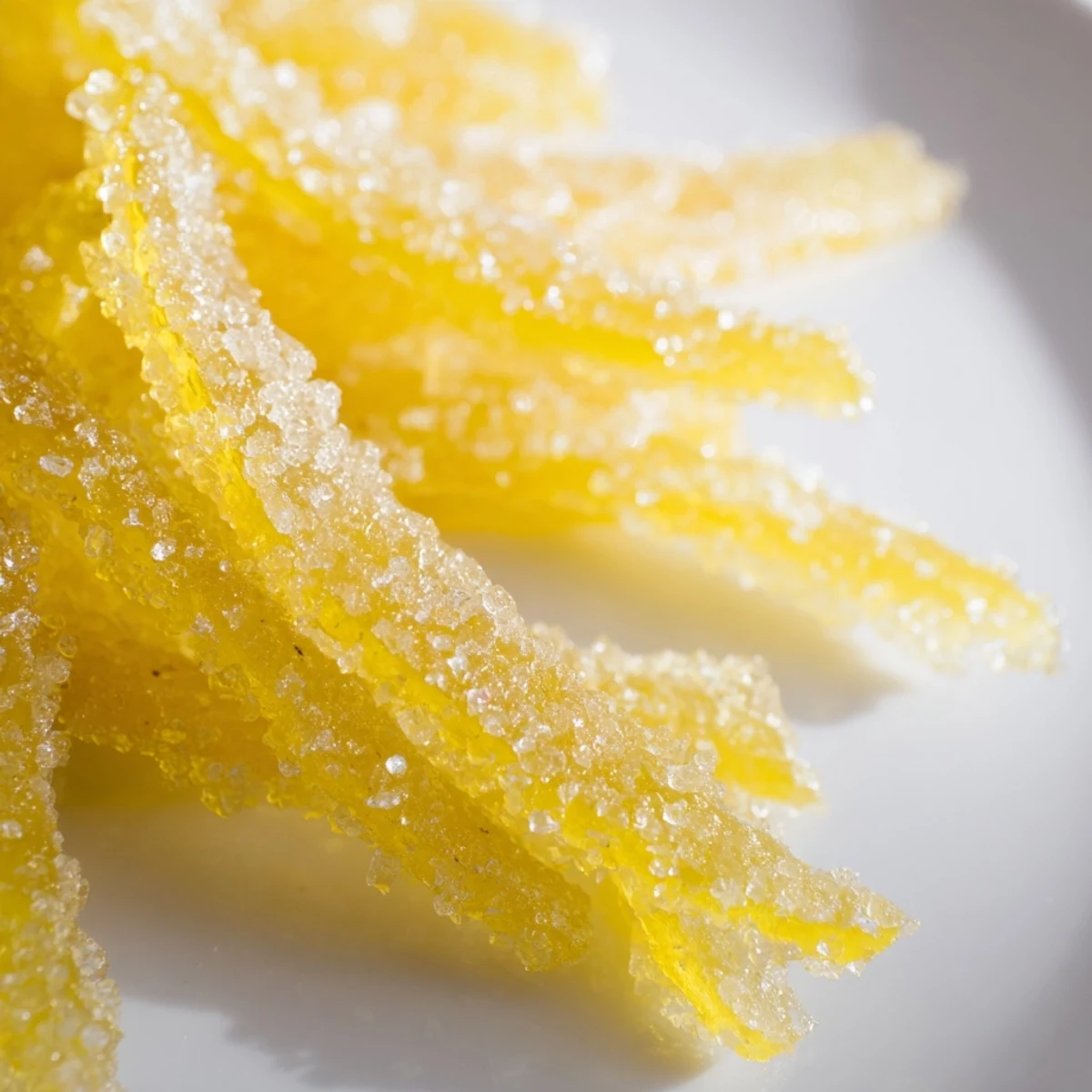
- Lift the peels out with a slotted spoon and lay them on a wire rack over parchment. Let them cool and dry for an hour or two, then toss them in the remaining sugar until every piece is coated.
 Save to Pinterest
 The first time I served these after dinner, a friend picked one up, squinted at it, then ate three more without saying a word. Later she texted asking if I'd made them or bought them, and when I told her, she said she didn't believe me. That's the kind of recipe this is.
What to Do with Them
I've tucked these into brownies, scattered them over vanilla ice cream, and once pressed them into the top of a lemon loaf before baking. They also work beautifully chopped fine and stirred into whipped cream or folded into scone dough. Sometimes I just keep a jar on the counter and eat them like candy, which is exactly what they are.
How to Store Them
Keep them in an airtight container at room temperature, and they'll stay good for up to two weeks. If they start to soften or stick together, you can toss them in a little extra sugar to freshen them up. I've never had a batch last long enough to test the limits.
Ways to Change It Up
You can swap lemons for oranges, limes, or even grapefruit, though grapefruit peel takes a little longer to lose its bitterness. I've also dipped the dried peels halfway in dark chocolate and let them set on parchment, which turns them into something you'd want to wrap in paper and give away.
- Try adding a cinnamon stick or a few cloves to the syrup for a spiced version.
- Use the leftover syrup to sweeten tea, cocktails, or drizzle over yogurt.
- Chop the finished peels and mix them into shortbread dough for a citrusy twist.
 Save to Pinterest
 There's something quietly satisfying about turning scraps into something this good. Every time I make them, I'm reminded that the best recipes don't always start with a plan, just a little curiosity and a unwillingness to waste something bright.
Recipe Questions & Answers
- → How do I prepare lemon peels for candying?
-
Start by washing the lemons thoroughly. Use a sharp knife or vegetable peeler to remove wide yellow strips of the peel, avoiding the white pith to minimize bitterness. Slice these into thin strips about 1/4 inch wide.
- → Why is blanching lemon peels important?
-
Blanching lemon peels in boiling water several times helps to reduce their natural bitterness, ensuring a sweeter and more pleasant final taste.
- → What is the best way to simmer lemon peels in sugar syrup?
-
Combine equal parts granulated sugar and water, bring to a simmer, then add the lemon strips. Simmer gently (avoid rapid boiling) for about 40 minutes, stirring occasionally until the peels become translucent and tender.
- → How should candied lemon peels be dried and stored?
-
After simmering, transfer the lemon strips to a wire rack placed over parchment paper and let them dry for 1-2 hours. Once coated with sugar, store them in an airtight container at room temperature for up to two weeks.
- → Can other citrus fruits be used instead of lemons?
-
Yes, oranges or limes can be used to create candied peels with different but equally delightful citrus flavors.
- → What are some serving suggestions for candied lemon peels?
-
Use them as a garnish for desserts, stir them into baked goods, enjoy as a sweet snack, or dip in melted dark chocolate for an extra treat.
