
 Save to Pinterest
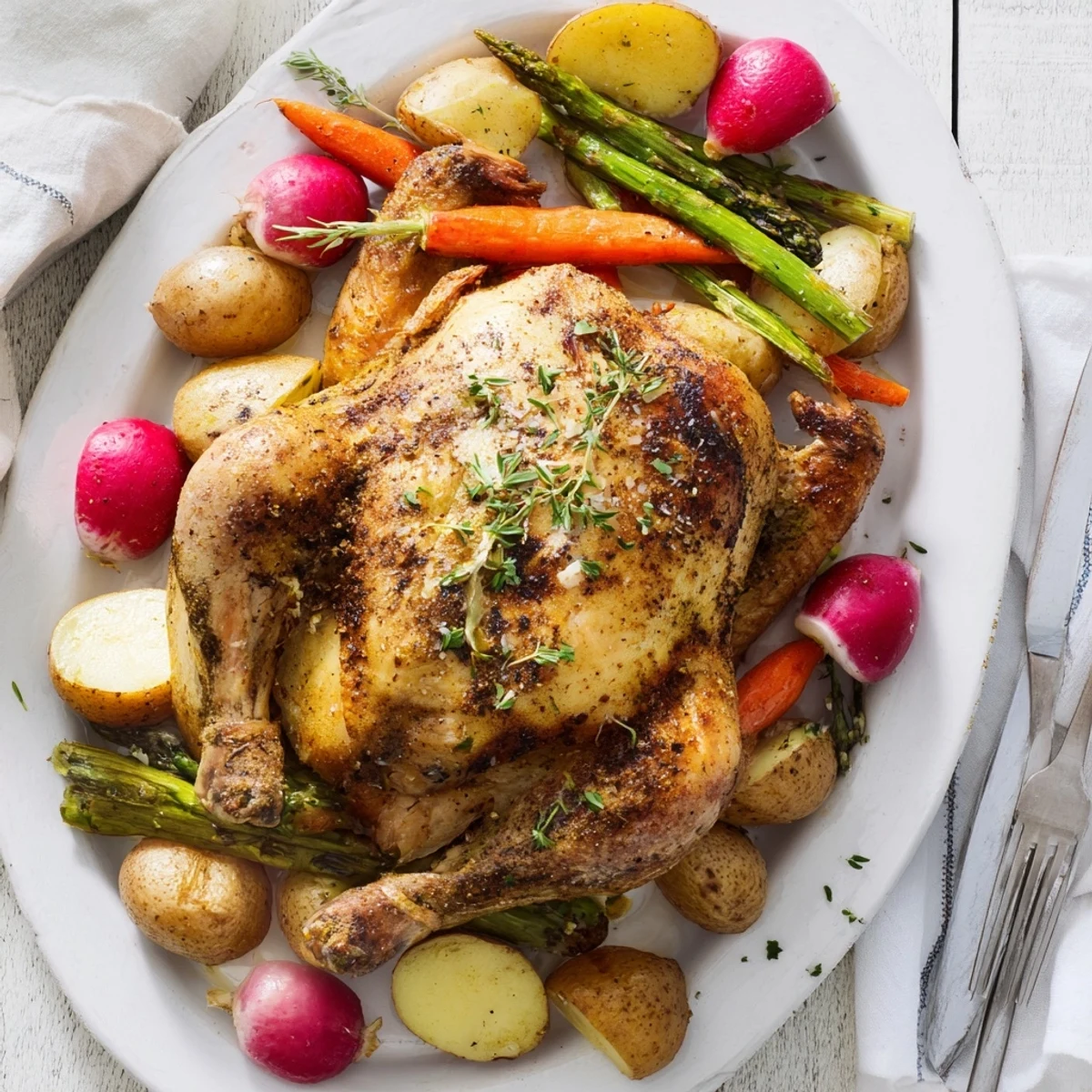
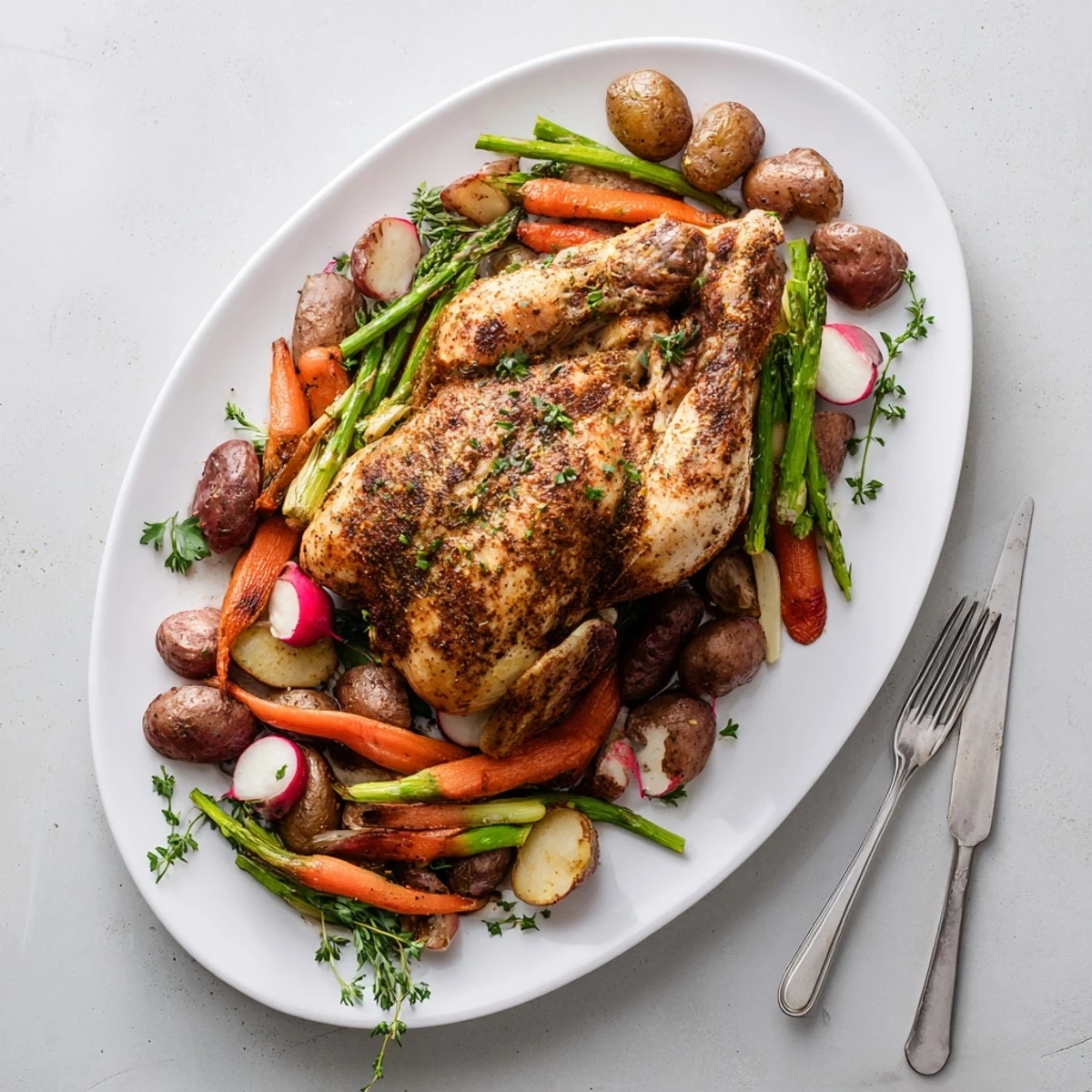
 This herb roasted chicken delivers juicy, golden meat infused with rosemary, thyme, and parsley, surrounded by tender baby potatoes, carrots, asparagus, and radishes. The one-pan method lets the vegetables soak up savory pan juices while the chicken roasts to perfection. Ready in 90 minutes with just 20 minutes of prep, this seasonal dish serves four and pairs beautifully with light white wines like Chardonnay or Sauvignon Blanc.
There is something deeply satisfying about the way a whole chicken transforms in the oven, the skin turning golden and crisped while the kitchen fills with the earthy perfume of rosemary and thyme. I remember pulling this particular roast from the oven one rainy April evening, the spring vegetables beneath the bird having soaked up all those rendered juices until they were sweet and tender. My roommate walked in just as I was taking the first photo, her eyes widening at the sight of that glossy, herb-freckled skin. We ended up eating straight from the roasting pan, standing at the counter because waiting for plates somehow felt like asking too much.
I made this for a small dinner gathering last spring, honestly unsure how roasting a whole chicken would go over with a group used to more elaborate meals. But something about that rustic presentation, the bird surrounded by colorful vegetables and flecked with fresh herbs, made everyone gather around the oven like it was a campfire. My friend Sarah, who swears she does not like cooked carrots, went back for thirds of the glazed baby carrots that had been roasting in the chicken fat. Sometimes the simplest dishes are the ones that bring people to the table fastest.
Ingredients
- Whole chicken: A 3.5 pound bird feeds four people perfectly, leaving you with decent leftovers for sandwiches or soup the next day
- Olive oil: Use a good quality oil here since you will be tasting it in both the chicken skin and roasted vegetables
- Lemon: Stuffing the cavity with lemon halves releases aromatic steam that keeps the meat incredibly moist from the inside out
- Garlic cloves: Smashed rather than minced, these cloves mellow and sweeten as they roast inside the chicken
- Fresh herbs: The combination of rosemary, thyme, and parsley gives you that classic roasted chicken aroma that makes everyone hungry
- Baby potatoes: These take longer to cook than the other vegetables, so they go in first and become creamy inside with crispy skins
- Baby carrots: Spring carrots are naturally sweet and roasting them concentrates that natural sugar beautifully
- Asparagus: Added during the last twenty minutes so it stays tender-crisp and vibrantly green
- Radishes: Roasting completely transforms radishes, mellowing their sharp bite into something almost buttery and mild
Instructions
- Get your oven ready:
- Preheat to 400 degrees and position your oven rack in the center position to ensure even cooking and good air circulation around the whole bird
- Prep the chicken:
- Pat the chicken completely dry with paper towels, then rub it all over with olive oil, salt, and pepper, getting underneath the skin where you can reach
- Stuff the cavity:
- Fill the inside of the chicken with the lemon halves, smashed garlic cloves, and about half of your chopped fresh herbs
- Truss the bird:
- Tie the legs together with kitchen twine and tuck the wing tips under the body so everything stays neat and cooks evenly
- Arrange the base vegetables:
- Place your potatoes, carrots, and radishes in a large roasting pan, drizzle with olive oil, season with salt and pepper, and toss until everything is coated
- Position the chicken:
- Set the prepared chicken right on top of the vegetables so all those delicious juices can drip down and flavor everything underneath
- Start the roast:
- Roast for 50 minutes, opening the oven halfway through to baste the chicken with the pan juices that have started to accumulate
- Add the remaining vegetables:
- Scatter the asparagus and remaining fresh herbs around the chicken and return to the oven for another 20 minutes until the thigh reaches 165 degrees
- Rest before carving:
- Let the chicken rest for at least 10 minutes so the juices redistribute throughout the meat rather than running out onto the cutting board
 Save to Pinterest
 This recipe has become my go-to for Sunday dinners, that perfect meal that feels special but does not require me to miss out on conversation while tending to multiple pans. There is something so honest about serving a whole roasted chicken, the way people instinctively understand that care went into it even though the preparation is straightforward. Last time I made it, we saved the carcass for stock the next day, stretching one good chicken into three separate meals for the week ahead.
Getting The Crispiest Skin
I learned that completely drying the chicken with paper towels before seasoning is the secret to really crispy skin, any moisture left on the surface will just steam instead of crisp up. If you want extra crackling skin, run the chicken under the broiler for just two to three minutes after it finishes roasting, but watch it like a hawk because it goes from golden to burned quickly.
Choosing Your Vegetables
The beauty of this recipe is how adaptable it is to whatever looks good at the market. I have used snap peas, baby turnips, and even chunks of fennel when they looked particularly fresh and inviting. Just keep in mind that harder vegetables need more time while delicate greens should be added during those final twenty minutes.
Timing Everything Right
The most important lesson I have learned is that all vegetables are not created equal when it comes to roasting time. I organize my vegetables into two groups before I even turn on the oven, the long-cooking root vegetables and the quick-cooking spring vegetables.
- Put potatoes, carrots, radishes, and other dense vegetables in the roasting pan from the start
- Add asparagus, snap peas, and green beans during the last twenty minutes only
- Check your vegetables for doneness when you check the chicken temperature, nothing is worse than perfect chicken accompanied by mushy vegetables
 Save to Pinterest
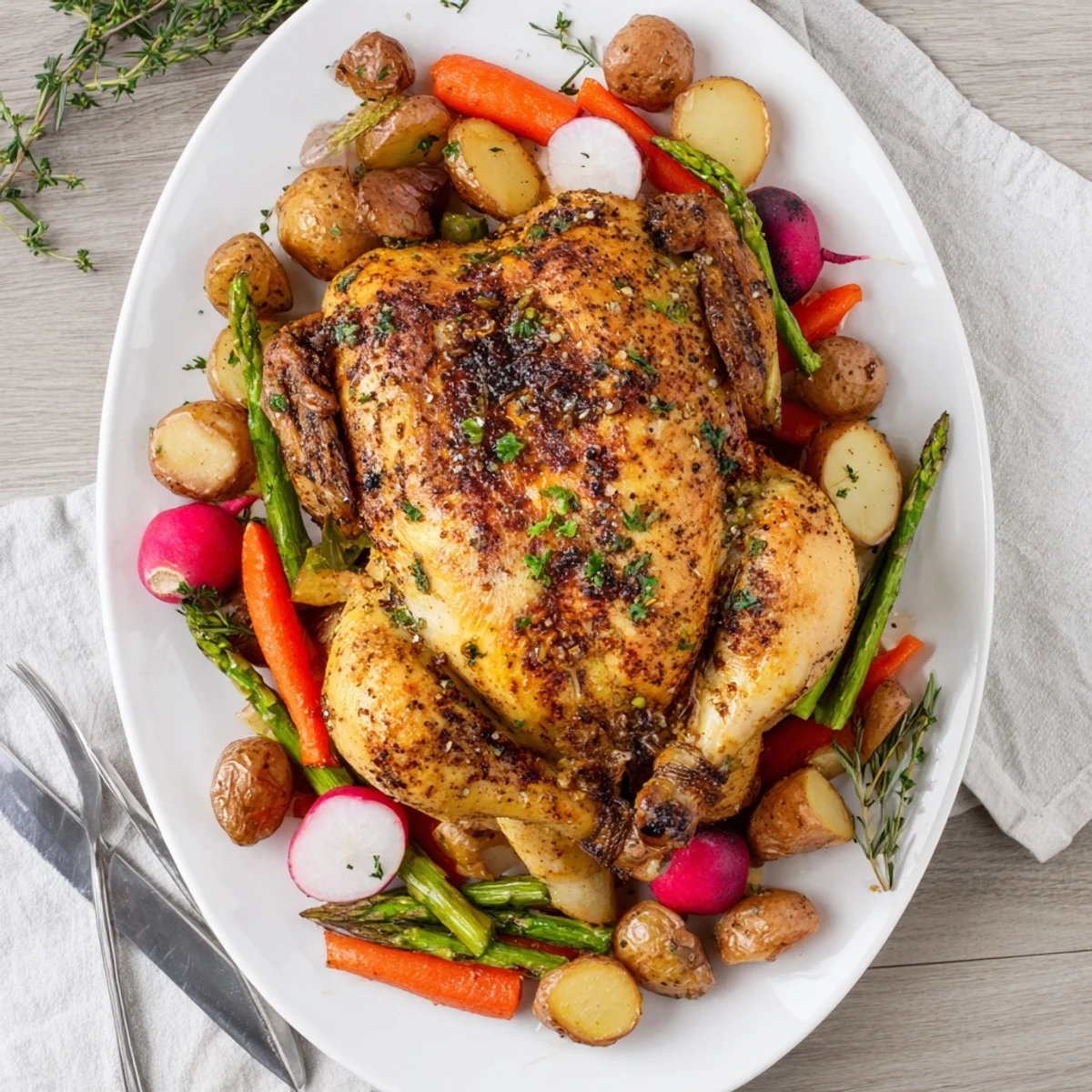
 There is something deeply grounding about a properly roasted chicken, the kind of meal that makes any ordinary Tuesday feel like a small occasion worth celebrating.
Recipe Questions & Answers
- → What temperature should the chicken reach?
-
The chicken is done when a thermometer inserted into the thickest part of the thigh reads 75°C (165°F) and the juices run clear.
- → Can I use other vegetables?
-
Yes, swap in snap peas, baby turnips, or other spring vegetables based on what's available and in season.
- → How do I get crispy skin?
-
For extra crispy skin, finish the chicken under the broiler for 2-3 minutes after the roasting time is complete.
- → Why rest the chicken before carving?
-
Resting for 10 minutes allows the juices to redistribute throughout the meat, ensuring juicy, tender results.
- → What wine pairs well?
-
Light white wines like Chardonnay or Sauvignon Blanc complement the herb flavors and seasonal vegetables beautifully.
