
 Save to Pinterest
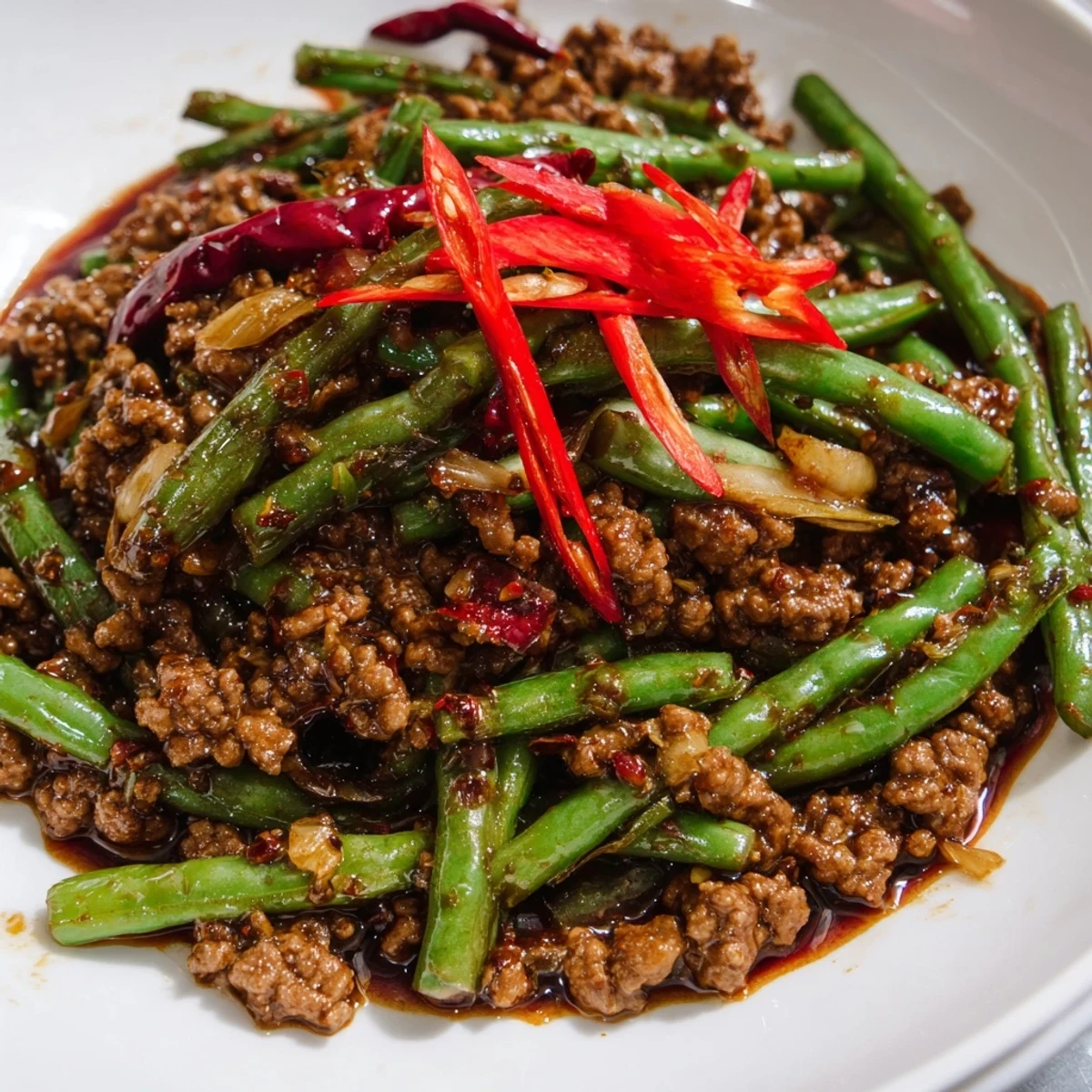
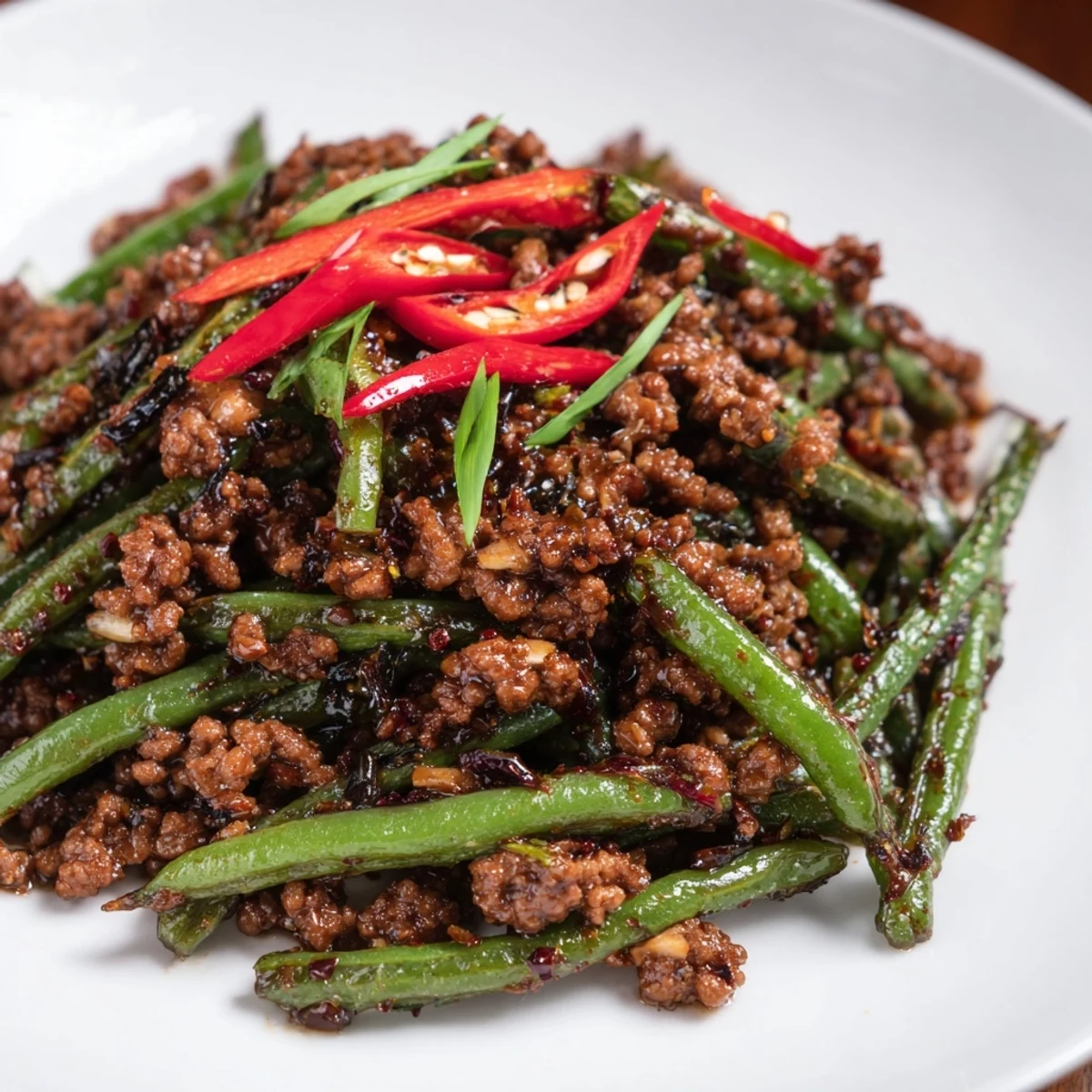
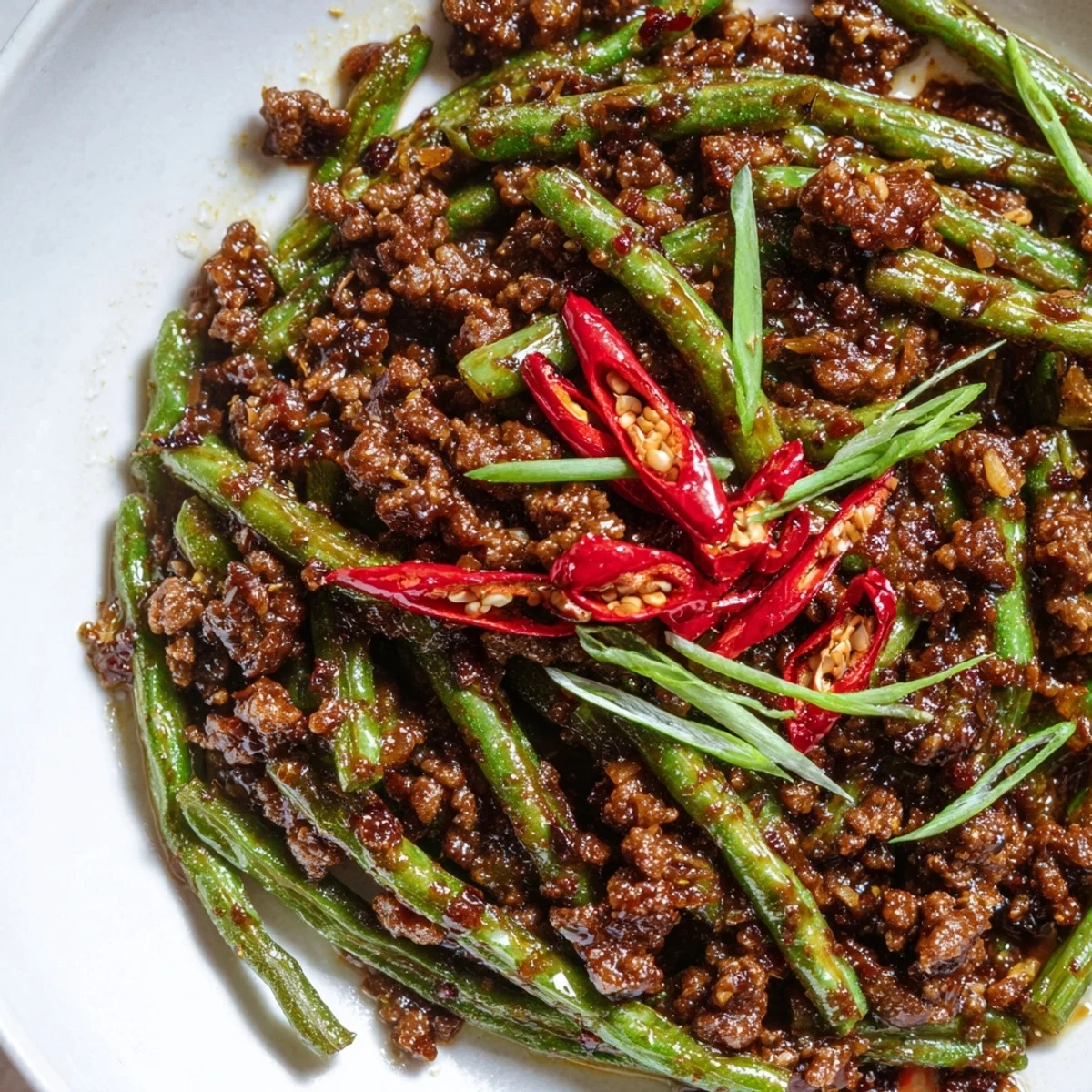
 This dish features fresh green beans blanched to crisp-tender perfection, stir-fried with browned minced beef and aromatics like garlic, ginger, and scallions. The bold Szechuan sauce, composed of chili bean paste, soy, Shaoxing wine, and peppercorns, provides a lively spicy and savory punch. Cooked quickly over high heat, the flavors meld beautifully while the green beans retain crunch. Optional sliced chilies add more heat. Serve hot, garnished with scallion greens, alongside jasmine rice for a complete meal. Variations include swapping beef for mushrooms or tofu for a vegetarian twist.
There's a particular moment in the kitchen when everything clicks—when you've got a hot wok, vibrant green beans hitting the pan with that satisfying sizzle, and the aroma of Szechuan peppercorns filling your whole space. I discovered this dish during a late-night cooking session, trying to recreate something I'd eaten at a small restaurant tucked into a Beijing alley, and somehow it turned out even better than the original. The numbing tingle of the peppercorns paired with the savory beef and crisp beans felt like a small victory, and I've made it countless times since.
I made this for a friend who claimed they didn't like spicy food, and watching their face light up after the first bite was unforgettable. They ended up asking for seconds and wanted the recipe immediately—that's when I knew this dish had staying power. Now whenever someone says 'I can't handle heat,' I smile because I know exactly how to convert them.
Ingredients
- Fresh green beans, 1 lb (450 g) trimmed: Blanching them first keeps them bright, crisp, and prevents them from turning dull during the final stir-fry, which is the secret to that perfect tender-crisp texture.
- Lean ground beef, 1 lb (450 g): The key is breaking it into small pieces as it cooks so it coats evenly with sauce and creates texture throughout the dish.
- Vegetable oil, 2 tablespoons: Split into two additions—one for toasting the peppercorns and one for the aromatics—so you build flavor layers.
- Small onion, finely diced: It mellows beautifully in the heat and adds a subtle sweetness that balances the spice.
- Garlic cloves, 4 minced: Fresh garlic never burns if you add it with the onion; the longer cooking time softens it without bitterness.
- Fresh ginger, 1-inch piece grated: Grating instead of mincing releases more juice and spreads the warm, peppery flavor evenly.
- Scallions, 2 sliced (whites and greens separated): This separation matters—whites go in early for cooked flavor, greens as garnish for brightness.
- Fresh red chilies, 1–2 thinly sliced (optional): These add fresh heat and visual appeal; remove the seeds if you want less intensity.
- Soy sauce, 3 tablespoons: Use a good quality one—it's the backbone of your sauce and shouldn't taste harsh.
- Szechuan peppercorns, 1 tablespoon lightly crushed: Crushing them yourself releases their distinctive numbing oils; pre-ground loses potency quickly.
- Chili bean paste (Doubanjiang), 1 tablespoon: This fermented paste is essential and non-negotiable; it's what gives the dish its authentic depth and savory kick.
- Rice vinegar, 1 tablespoon: A touch of brightness cuts through the richness and prevents the sauce from feeling one-dimensional.
- Shaoxing wine, 1 tablespoon (or dry sherry): It adds a subtle sweetness and depth that soy sauce alone can't achieve.
- Sugar, 2 teaspoons: Just enough to balance the spice and saltiness without making anything taste sweet.
- Toasted sesame oil, 1 teaspoon: Added at the end for its aromatic, nutty finish—too much heat destroys its magic.
Instructions
- Blanch the green beans:
- Boil salted water and add trimmed beans for 2–3 minutes until they turn bright green and just yield to a fork. Shock them immediately in cold water to lock in that color and snap; this prevents overcooking when they hit the wok later.
- Toast the peppercorns:
- Heat a tablespoon of oil in your wok over medium-high heat, add the crushed Szechuan peppercorns, and listen for them to crackle for about 30 seconds. The fragrance that hits your nose is the signal they're releasing their numbing oils.
- Brown the beef:
- Increase heat slightly and add ground beef to the peppercorn oil, breaking it apart as it cooks for 4–5 minutes until no pink remains. Transfer it to a plate and let excess fat drain—you'll add it back cleaner and stronger-flavored.
- Build the aromatic base:
- Add the remaining oil, then onion, garlic, ginger, and scallion whites, stirring constantly for 2 minutes until the kitchen smells like a Szechuan restaurant. This is your foundation layer.
- Deepen with paste:
- Stir in the chili bean paste and cook for 1 minute, letting it warm through and release its fermented complexity into the oil.
- Bring it all together:
- Return the beef to the wok along with the blanched beans and fresh chilies if using, stirring for 2–3 minutes until everything is coated and warmed. The beans will glisten as they absorb all those flavors.
- Finish with sauce:
- Pour in soy sauce, rice vinegar, Shaoxing wine, sugar, and sesame oil, tossing everything constantly for 1–2 minutes until the sauce clings to every bean. Taste as you go—this is your moment to adjust heat or saltiness.
- Plate and serve:
- Garnish with the reserved scallion greens and serve immediately over steamed jasmine rice, letting people enjoy it while the beans are still crisp and the aroma is at its peak.
 Save to Pinterest
 The first time my partner tried this, they said it tasted like a restaurant but smelled even better than the finished dish—which is exactly right. That moment when all those ingredients come together in the wok is pure kitchen magic, and it's something I wanted to capture and share.
The Art of Building Flavor
What makes this dish special isn't any single ingredient but the way you layer them—starting with the Szechuan peppercorns toasting in oil, then building on that with aromatics, then the fermented depth of the chili bean paste. Each step matters because you're creating a foundation where everything that comes after sticks and resonates. This approach works in countless other stir-fries too, so once you understand the rhythm, you'll find yourself improvising with confidence.
Szechuan Peppercorn Magic
The numbing sensation from Szechuan peppercorns is called 'má lá' in Mandarin—literally numbing and spicy—and it's unlike regular heat. When you bite into a peppercorn, you get a tingling sensation that feels almost electric on your tongue, completely different from chili heat. This is worth seeking out authentic peppercorns for, as they transform the entire eating experience from 'this is hot' to 'this is alive.'
Customization Without Losing Your Way
This dish is flexible in smart ways—swap beef for finely chopped mushrooms or crumbled tofu if you're vegetarian, add bell peppers or carrots for extra crunch and color, and absolutely adjust the heat level to match your comfort. The structure stays the same, which means you can make it your own without losing what makes it special. One non-negotiable rule though: keep the chili bean paste and Szechuan peppercorns, because those two ingredients are what define the dish.
- Fresh chilies are optional and easily removed or reduced if you're cooking for mixed heat tolerances.
- If you can't find Shaoxing wine, dry sherry works well, though the flavor will be slightly less complex.
- Make extra sauce if you like things wetter—some people prefer more coating on their rice.
 Save to Pinterest
 This is the kind of dish that reminds you why cooking from scratch matters—something made with care tastes different than takeout, no matter how good the restaurant is. Serve it hot, eat it together, and let the boldness of the flavors start a conversation.
Recipe Questions & Answers
- → How do I keep green beans crisp?
-
Blanch green beans briefly in boiling salted water, then rinse under cold water to stop cooking, preserving their bright color and crisp texture.
- → Can I adjust the spice level?
-
Yes, reduce or omit fresh chilies and adjust Szechuan peppercorns to control heat while maintaining flavor complexity.
- → What can I substitute for minced beef?
-
Use finely chopped mushrooms or crumbled tofu to create a vegetarian-friendly version without compromising texture.
- → Which cooking tools are best for this dish?
-
A wok or large skillet helps achieve high heat and quick stir-frying, ensuring even cooking and flavor development.
- → What side pairs well with this stir-fry?
-
Steamed jasmine rice complements the bold, spicy flavors, balancing the dish's richness and heat.
