
 Save to Pinterest
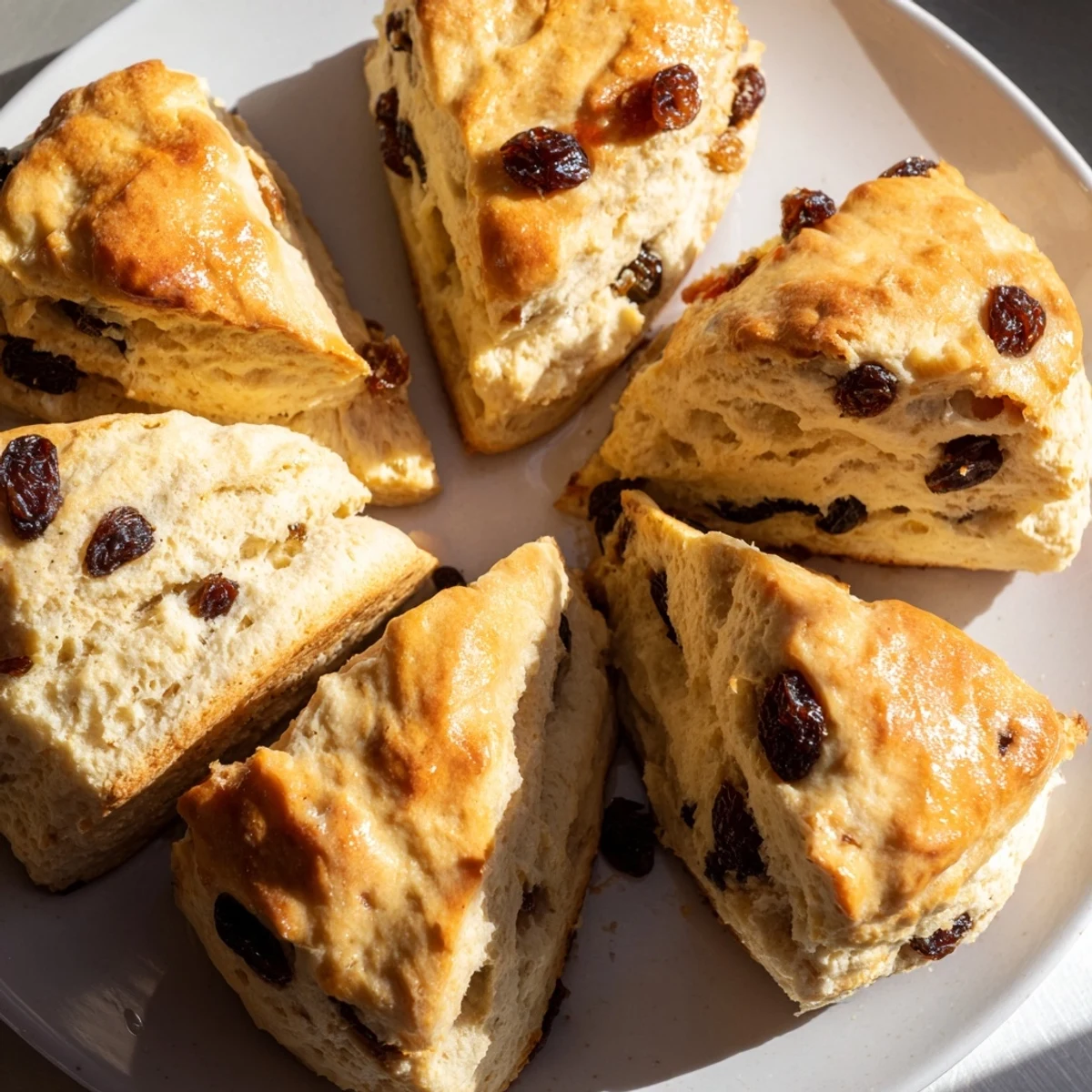
 These tender, buttery scones capture the essence of British baked goods with a soft crumb and golden crust. Combining dry ingredients like flour, sugar, baking powder, and salt with cold butter to create a crumbly texture, the mixture is gently blended with milk and egg for moisture. Optional raisins, currants, or chocolate chips add subtle bursts of sweetness. Shaped into wedges and brushed with milk for shine, they're baked to a warm golden finish. Serve slightly cooled with clotted cream or jam for a classic treat.
I still remember the first time I made proper British scones at home. It was a rainy afternoon, and I'd just returned from a small café in the Cotswolds where I'd been served the most delicate, tender scones with clotted cream and strawberry jam. I became obsessed with recreating that moment in my own kitchen. After a few attempts and learning the hard way that cold butter is absolutely essential, I finally nailed it. Now, every time I bake a batch, that cozy English tea room feeling comes right back to me.
The first time I served these to my family on a Sunday morning, my daughter took one bite and asked if we could make them every weekend. That was the moment I knew I'd cracked the recipe. Now they're a staple in our house, and I love watching people's faces light up when they bite into that golden, buttery exterior and find that tender crumb inside.
Ingredients
- All-purpose flour (2 cups/250 g): This is your foundation, and using the right amount matters more than you'd think. I always spoon and level my flour rather than scooping straight from the bag, which prevents overpacking and keeps your scones tender
- Granulated sugar (1/4 cup/50 g): Just enough sweetness to balance the buttery richness without making them taste like dessert. This is what separates a proper scone from a biscuit
- Baking powder (1 tablespoon): This is your leavening agent and what gives scones their characteristic light, airy texture. Don't skip this or substitute it with baking soda
- Salt (1/2 teaspoon): A pinch of salt enhances all the flavors and makes the butter shine through
- Cold unsalted butter (1/2 cup/115 g), cubed: This is non-negotiable. The butter must be cold, and I mean genuinely cold straight from the fridge. These little pockets of cold butter create steam as they bake, which gives you those tender layers everyone loves
- Whole milk (2/3 cup/160 ml) plus extra for brushing: The milk brings the dough together and creates a tender crumb. I always keep a little extra for brushing the tops before baking, which gives them that beautiful golden shine
- Large egg (1): This acts as a binder and helps create structure without making the scones tough
- Optional add-ins (1/2 cup/75 g raisins, currants, or chocolate chips): I love currants for a traditional approach, but honestly, chocolate chips are where my heart is. If you use add-ins, fold them in gently at the very end to keep everything tender
Instructions
- Get everything ready:
- Preheat your oven to 400°F (200°C) and line a baking sheet with parchment paper. This step matters because your oven needs to be properly heated to bake the scones evenly and quickly. The parchment paper prevents sticking and helps them bake more evenly on the bottom
- Mix your dry ingredients:
- In a large bowl, whisk together the flour, sugar, baking powder, and salt. I like to whisk rather than stir because it aerates the flour slightly and helps distribute the baking powder evenly. You're building the foundation here, so take a moment with this step
- Cut in the cold butter:
- Add your cubed cold butter to the dry mixture. Using a pastry cutter, two knives, or even your fingertips, work the butter into the flour until the mixture looks like coarse breadcrumbs or wet sand. This is the step that determines everything. You want pea-sized pieces of butter throughout, which will create those lovely tender layers. If your hands are warm, work quickly. Some people even chill their fingertips first
- Combine the wet ingredients:
- In a separate bowl, whisk together the milk and egg until they're well combined. This creates a smooth, cohesive liquid that will bring your dough together
- Bring it together:
- Pour the wet ingredients into the dry mixture and stir gently until just combined. And I do mean just combined. This is where so many people go wrong. Overmixing develops gluten, which makes tough scones instead of tender ones. Stop stirring as soon as you don't see any dry flour. The dough should look slightly shaggy and rough, not smooth
- Add optional goodness:
- If you're using raisins, currants, or chocolate chips, gently fold them in now, keeping your touch light and your mixing minimal
- Shape the dough:
- Turn the dough out onto a lightly floured surface. Pat it gently into a round that's about 1 inch (2.5 cm) thick. Don't knead it or work it too much. Treat it like you're handling something delicate
- Cut your scones:
- Using a knife, cut the round into 8 wedges like you're slicing a pie. Alternatively, if you have a round cutter, cut out traditional scone shapes and gather the scraps gently to re-roll and cut again. Place them on your prepared baking sheet, leaving a little space between each one
- Give them shine:
- Brush the top of each scone with a little milk using a pastry brush. This creates that beautiful golden exterior we all crave
- Bake to golden perfection:
- Bake for 12 to 15 minutes, until the tops are golden brown and the scones feel set when you gently touch them. Every oven is different, so start checking around the 12-minute mark. You want them baked through but still tender inside. When they come out, the kitchen will smell absolutely heavenly
- Cool briefly:
- Transfer the scones to a wire rack and let them cool for just a few minutes. They're best served warm, so don't let them cool completely. While they're still warm is when they're at their absolute best
 Save to Pinterest
 I made these scones for my neighbor who had just moved to the area, and she came over the next day to ask for the recipe. That simple gesture of sharing warm scones with jam and cream became the beginning of a real friendship. Now whenever I bake a batch, I always save some to share because I know these little moments matter.
The Perfect Cream Tea Setup
Serving is honestly just as important as baking when it comes to scones. I always warm mine slightly, split them open gently, and pile on generous dollops of clotted cream and jam. The traditional English way is cream first, then jam, though some regions do it the other way around. Personally, I let people make their own choice because the real magic is in the warmth, the butter, and the moment of sharing. A pot of hot tea alongside makes everything feel like a proper occasion, even if it's just a regular Tuesday afternoon.
Storage and Make-Ahead Tips
The wonderful thing about scones is that they're best the day you make them, but they're also forgiving if you need to plan ahead. You can prepare the dough the night before, keep it covered in the fridge, and then bake it fresh in the morning. I've also frozen unbaked scones on the baking sheet and baked them directly from frozen, adding just 2 to 3 minutes to the baking time. For leftover scones, store them in an airtight container and warm them gently in the oven before serving. They never last long in my house, so I rarely have to worry about storage.
Variations and Flavor Adventures
Once you master the basic scone, the fun really begins. I've experimented with a splash of vanilla extract, a pinch of lemon zest, and even a hint of cardamom for a more interesting flavor profile. Some of my favorite combinations are dried cranberries with orange zest, white chocolate with blueberries, and classic currants with a touch of cinnamon. The beauty is that the base recipe is so solid that you can play with flavors without risking the texture. Just remember to keep your mixing light and your additions minimal so you don't weigh down that tender crumb.
- Try a pinch of lemon zest or a splash of vanilla extract for subtle flavor enhancement
- Swap raisins for dried cranberries, or omit them entirely for classic plain scones
- Experiment with white chocolate chips, blueberries, or even savory add-ins like cheese and herbs once you're comfortable with the basic technique
 Save to Pinterest
 Every time I pull a batch of golden scones from the oven, I'm reminded that the best kitchen moments are the simple ones. There's something about warm, buttery scones fresh from the oven that brings people together.
