
 Save to Pinterest
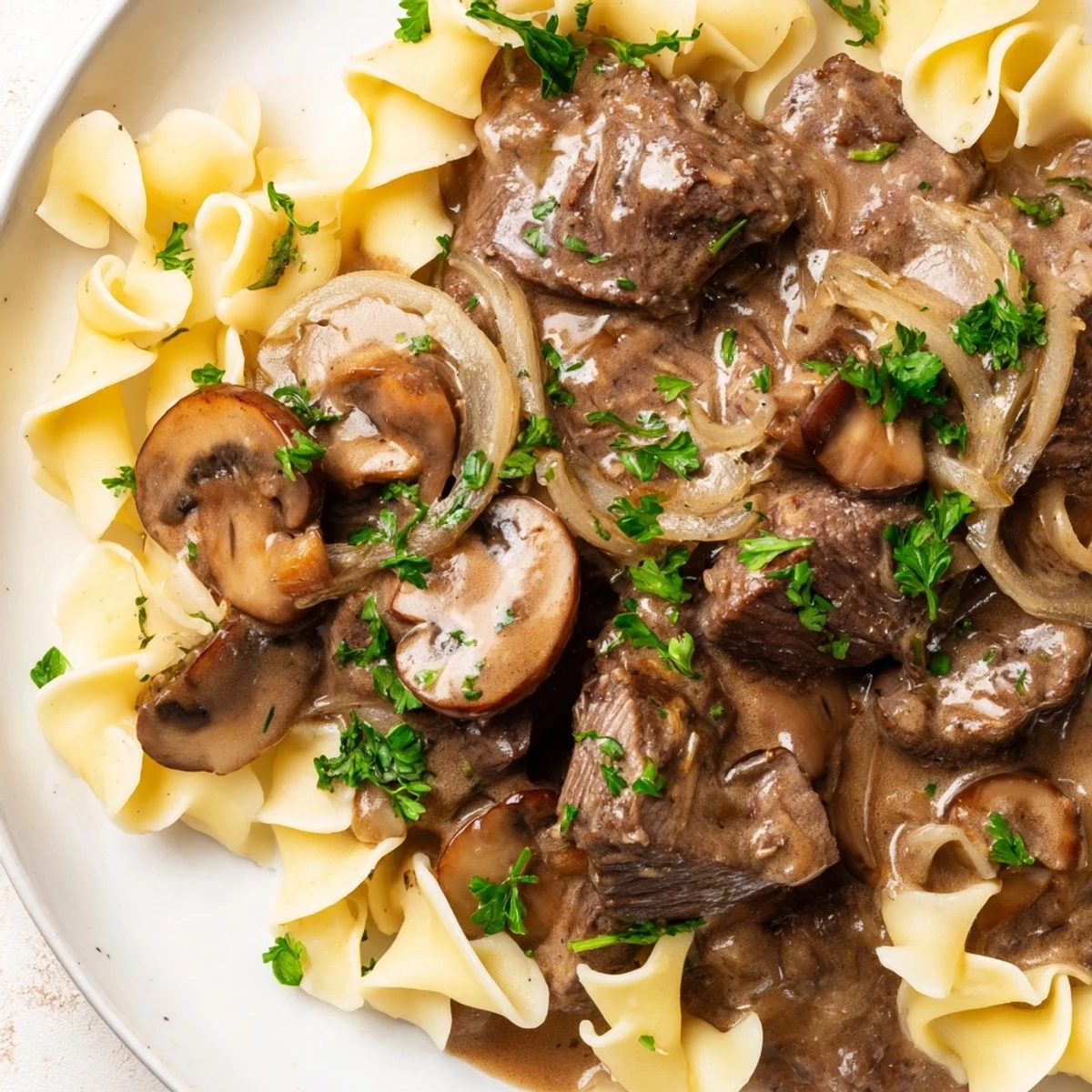
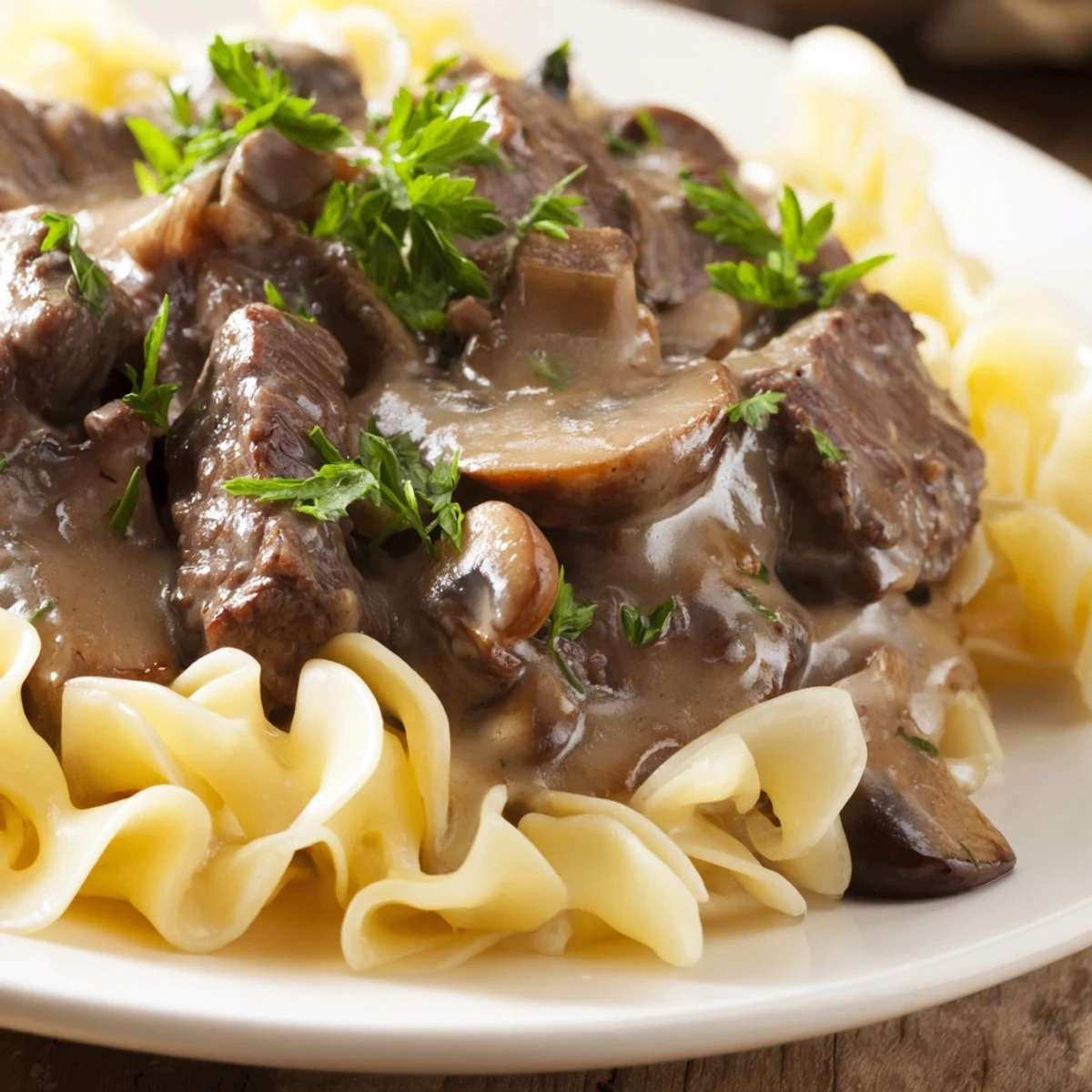
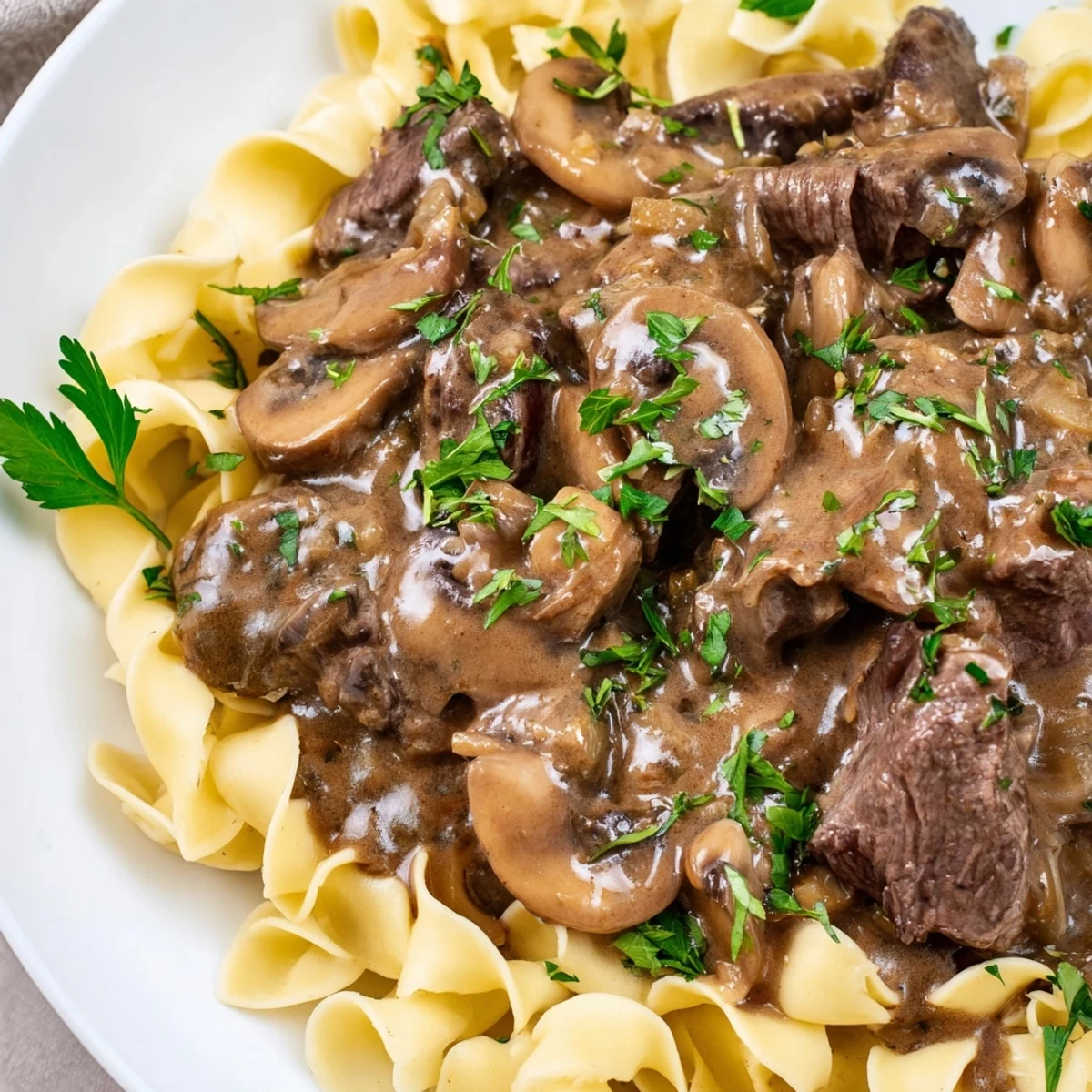
 This dish features tender strips of beef seared to perfection and simmered in a rich, creamy mushroom gravy. Sautéed onions, garlic, and a blend of tomato paste and Dijon mustard build depth, while sour cream adds smoothness. Served over egg noodles or rice, it offers a comforting balance of flavors and textures perfect for a satisfying main course.
There's something about the smell of beef hitting a hot pan that takes me back to my aunt's kitchen on cold Sunday afternoons. She'd make stroganoff without fuss, just good ingredients and a knowing hand. I've since learned that the secret isn't complexity—it's respecting each element enough to let it shine, and knowing exactly when to add that sour cream so it stays silky instead of breaking. This version honors that simplicity while delivering the kind of comfort food that makes people linger at the table.
I made this for friends on a rainy November evening, and I remember one of them asking why restaurant stroganoff never tastes like this. The answer was simple: they were probably using cream that had been sitting in warmth too long, or rushing the mushroom stage. When you give the mushrooms time to release their water and then evaporate it, they become concentrated, almost meaty. That's the detail that changes everything.
Ingredients
- Beef sirloin or rump steak (500 g): Slice thin against the grain for tenderness; this cut is lean enough that quick cooking keeps it from toughening.
- All-purpose flour (1 tbsp): This light dusting helps develop a proper sear and thickens the sauce naturally without lumps.
- Salt and black pepper (1/2 tsp each): Season the flour mixture generously—this is your only chance to flavor the beef directly.
- Unsalted butter and olive oil (2 tbsp + 1 tbsp): Butter alone would burn at high heat; oil raises the smoke point so you get that golden crust.
- Medium onion, finely chopped: Onions cook down to almost nothing, adding sweetness and body to the sauce.
- Garlic cloves, minced (2): Add it after the onion softens, or it'll taste acrid and overcooked.
- Cremini or white button mushrooms (300 g), sliced: Buy them whole and slice them yourself—pre-sliced ones release moisture too early and never brown properly.
- Tomato paste (1 tbsp): A small amount adds subtle depth without making the sauce taste tomatoey.
- Dijon mustard (1 tsp): This cuts through the richness and adds a gentle sharpness that balances the cream.
- Beef broth (250 ml): Use homemade or good quality; it's the backbone of the sauce.
- Sour cream (120 ml): Full-fat and cold from the fridge; it stays smooth and luxurious if you don't overheat it.
- Worcestershire sauce (1 tbsp): Just enough to add savory complexity without announcing itself.
- Egg noodles or cooked rice (250 g): Egg noodles are traditional and absorb the sauce beautifully.
- Fresh parsley, chopped (2 tbsp, optional): A small garnish brightens the richness and adds a hint of freshness.
Instructions
- Prepare the beef:
- Toss your thin beef strips with flour, salt, and pepper in a bowl. This light coating helps them brown and eventually thickens your sauce.
- Sear the beef:
- Heat butter and oil together in a large skillet over medium-high heat until the fat shimmers. Working in batches so the pan stays hot, sear the beef for 1–2 minutes per side until golden and browned on the edges—don't crowd the pan or it'll steam instead of sear. Set the browned beef aside on a plate.
- Build the aromatic base:
- Reduce heat to medium, add the remaining butter, and sauté your chopped onion for about 3 minutes until it turns soft and translucent. Add the minced garlic and cook for just 30 seconds until fragrant.
- Brown the mushrooms:
- Add your sliced mushrooms and let them sit undisturbed for a minute or two so they make contact with the hot pan. Then stir and cook for 5–7 minutes, letting all their released moisture evaporate so they turn golden and concentrated. This is where you build the soul of the sauce, so be patient here.
- Deepen the flavors:
- Stir in the tomato paste and mustard, cooking for about 1 minute so they lose their raw edge and meld into the mushrooms and onions.
- Create the sauce foundation:
- Pour in the beef broth and Worcestershire sauce, using a wooden spoon to scrape up all the golden, flavorful bits stuck to the bottom of the pan—that's liquid gold. Bring everything to a gentle simmer and let it bubble for 3 minutes to marry the flavors.
- Return the beef:
- Add back the seared beef strips along with any juices that pooled on the plate. Simmer gently for 3–4 minutes, just enough to heat the beef through without toughening it.
- Finish with sour cream:
- Lower the heat to medium-low and stir in the sour cream until the sauce is smooth and heated through. Watch it carefully—if it boils, the sour cream can split and look curdled, so keep the temperature gentle and low.
- Serve:
- Ladle the stroganoff over buttered egg noodles or rice, scatter parsley on top if you like, and bring it to the table while it's still steaming.
 Save to Pinterest
 Years ago, a cooking teacher told me that stroganoff is less about the recipe and more about understanding the moment when each ingredient is ready. The mushrooms need time to concentrate, the sour cream needs gentleness, the beef needs just enough heat to stay tender. I've since made it dozens of times, and the magic is always in honoring those small, quiet moments rather than rushing.
Why This Dish Works
Stroganoff is built on contrast: the richness of sour cream against the earthiness of mushrooms, the umami depth of beef broth against the sharp bite of Dijon. The beef itself stays secondary, tender and slightly sweet from the brief cooking time. It's a dish that feels indulgent without being heavy, and it scales up or down depending on who's at your table.
Timing and Make-Ahead Options
The stroganoff itself can be made hours ahead and reheated gently on the stovetop—in fact, it often tastes better the next day after the flavors have settled. Cook the noodles or rice fresh just before serving so they're hot and tender when you plate everything together.
Variations and Swaps
Once you understand the structure, stroganoff becomes flexible. Some of my favorite versions have emerged from what was in the fridge: chicken thighs instead of beef, a splash of brandy or red wine, or an extra handful of mushrooms when they're on sale. The sour cream is less negotiable—Greek yogurt works for a lighter version, but the sauce will taste tangier.
- Try a mix of mushroom types like cremini and oyster for deeper, more complex flavor.
- Substitute chicken or pork if beef isn't what you're craving, adjusting cooking time to match the protein.
- For a brighter finish, add a squeeze of fresh lemon juice just before serving instead of (or alongside) the parsley.
 Save to Pinterest
 There's a reason stroganoff has endured for generations—it's forgiving, flexible, and always delivers comfort. Once you've made it this way, you'll find yourself returning to it on cold evenings, knowing it will taste like home.
Recipe Questions & Answers
- → What cut of beef works best?
-
Sliced sirloin or rump steak works well for tender, quick-cooking strips.
- → Can I substitute sour cream?
-
Yes, Greek yogurt can be used for a lighter creamy texture without losing richness.
- → How to prevent beef from overcooking?
-
Brown beef quickly in batches over medium-high heat and finish simmering gently in the sauce.
- → What mushrooms are ideal here?
-
Cremini or white button mushrooms provide earthy flavor and a pleasing texture.
- → What can I serve alongside?
-
Egg noodles or cooked rice soak up the gravy nicely, enhancing the dish’s heartiness.
